Five Feet to Set Free
By De Jay
•
November 10, 2026
•
5 min read
•
26 views
Five feet. That was the distance between me and my inflatable tube. Yet I couldn't reach it.
On land, five feet is barely a couple of steps. But in the waters of Cronulla Beach, caught in a current with my body approaching exhaustion, those few feet had become almost impossible to cross.
I was struggling to return to shore. My arms and legs were tiring, my breathing had become desperate, and every attempt to swim harder was consuming the little energy I had left.
The harder I fought, the more exhausted I became. The more exhausted I became, the less capable I was of surviving.
I consider myself physically fit, a customed to get in uneasy situations, my workout routine, endurance training and breathing exercises. Yet there I was, unable to overcome a force that barely acknowledged my existence.
My determination remained strong. My physical capacity was disappearing.
And one reality became impossible to ignore: "If nobody comes, I might not make it out alive."
There is something extraordinary about the human mind. It can convince us to push beyond discomfort, to keep going when the body wants to stop.
But determination has a dangerous side when it refuses to recognize reality.
I was swimming harder, yet making almost no progress. Every movement demanded oxygen and energy. My breathing accelerated, my muscles weakened, and the current continued carrying on as though my struggle meant nothing. In deep water, exhaustion is not ordinary tiredness. You cannot simply sit down, stop moving or take a break. I realized that continuing to fight the current in the same way might exhaust my remaining strength. So I changed my approach. "I stopped trying to overpower the water. I turned onto my back and allowed it to support me."
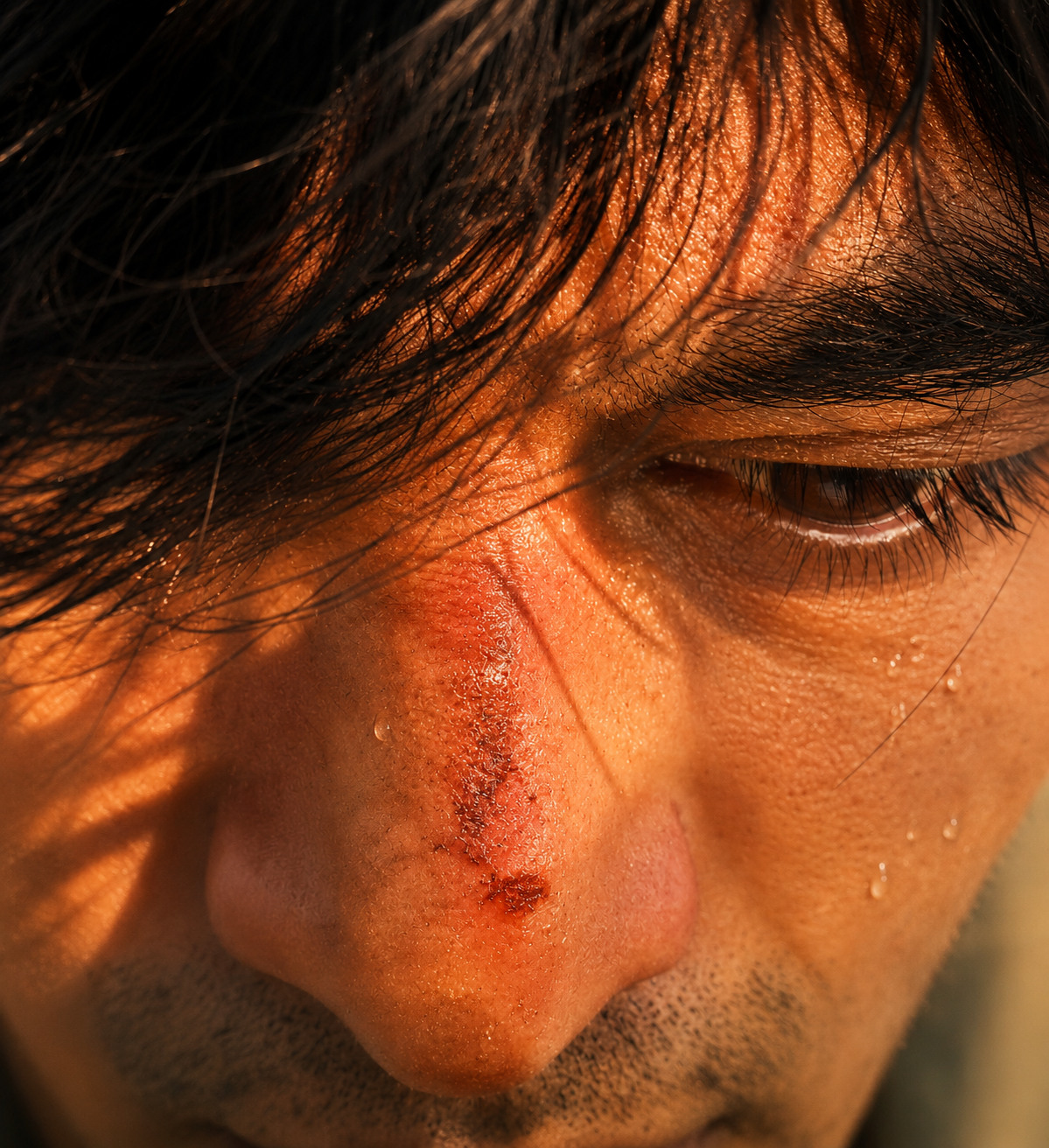
My face was turned towards the sky, exposed to the harsh sunlight. I could feel the sun burning my face and nose as I tried to regain control of my breathing.
The current hadn't disappeared. The shore hadn't come closer. I was still in danger.
But gradually, my breathing became manageable.
For approximately three to four minutes, I was alone in the water, struggling, changing position, trying to recover and assessing what I could realistically do next.
Then someone nearby managed to push my inflatable tube towards me.
Finally, I could reach it.
I climbed onto the tube and remained there for approximately six minutes, recovering from the exhaustion while waiting for further assistance.
Eventually, coastal safety guards arrived and brought me to shore. They took me to their small beach station, checked my condition, asked me several questions and allowed me to leave.
The entire experience had unfolded in minutes, but those minutes had revealed something that years of ordinary physical training could never fully demonstrate.
I've always believed there is a difference between knowing what to do and being capable of doing it when everything around you is going wrong.
Anyone can learn about breathing, adrenaline and remaining calm under pressure. But applying that knowledge when your muscles are exhausted, your breathing is uncontrolled and your survival is uncertain is an entirely different examination.
My physical training and breathing practice had given me some familiarity with discomfort and self-regulation. Yet the ocean revealed something equally important.
Your mind can tell you that you are strong enough to continue. But reality has its own measurement of your capacity.
And sometimes, the greatest intelligence is recognizing that measurement before your body reaches the point of no return.
Imagine being surrounded by twenty armed people. You may be courageous, physically strong and determined to fight, but resistance could cost your life. In that moment, restraint is not cowardice, it is judgment.
Life presents similar situations in different forms.
We fight for ambitions, relationships, opportunities and achievements. Sometimes we become so determined to win that we forget to measure what the struggle is costing us.
We mistake persistence for progress and retreat for defeat.
But some battles cannot be won simply by trying harder.
When circumstances favor you, remember that difficult days may come. When circumstances turn against you, remember that better days remain possible.
Accepting a temporary defeat does not mean abandoning your purpose. Sometimes it means preserving the strength, time and opportunity to succeed another day.
Perhaps the most profound realization was that the ocean was never my enemy.
It wasn't angry. It wasn't trying to defeat me. It didn't recognize my fitness, my confidence or my determination to survive. It was simply following the laws of nature.
I couldn't change the current. But I could change my response.
I couldn't overpower the ocean. But I could stop exhausting myself against it.
I couldn't guarantee that help would arrive. But I could give myself a better chance of remaining alive until it did. That day, five feet became a distance I couldn't cross. Yet accepting that limitation helped me survive.
I didn't conquer the ocean. I learned something far more valuable about myself.
Perhaps true strength is not believing you have no limits. It is understanding your limits accurately enough to know when to fight, when to adapt and when to let go. Knowledge can be learned. Control must be practiced. Strength must be measured. And wisdom is knowing the difference among them all.
Share This Article
Related Articles

Seen From Different Angles
I don’t become who you want me to be... I already am, you just recognize the part you understand
Jan 28, 2026